CD158a/h/g Monoclonal Antibody (HP-MA4), PE, eBioscience
PRODUCT DETAILS
Host: Mouse
Isotype: IgG2b, kappa
Clonality: Monoclonal
Clone: HP-MA4
Format: PE
Reactivity: Hu
Application: Flow Cytometry
Tested Dilution: 5 µL (0.25 µg)/test
Concentration: 5 μL/Test
Storage: 4°C, store in dark, DO NOT FREEZE!
Formulation: PBS with BSA and 0.09% sodium azide; pH 7.2
Purification: Affinity chromatography
Data Sheet: TDS
Specific Information
Description: The monoclonal antibody HP-MA4 recognizes several CD158 proteins, also known as KIR2D, specifically KIR2DL1 (CD158a), KIR2DS1 (CD158h), KIR2DS3, and KIR2DS5 (CD158g). It does not recognize KIR2DL2 (CD158b1), KIR2DS2 (CD158j), KIR2DL4 (CD158d) or KIR2DS4 (CD158i) and crossreactivity to KIR2DL3 (CD158b2) and KIR2DL5 (CD158f) are unknown. CD158 proteins are members of the killer cell immunoglobulin-like receptors (KIR) family of transmembrane glycoproteins that are expressed on NK cells and a subset of T cells. Each KIR has an isoform with either a short (S) or long (L) cytoplasmic domain which transduces either an activating or inhibitory signal, respectively. The crossreactivity of the HP-MA4 antibody to KIR2DS3 and KIR2DS5 was published in 2013.
Applications Reported: This HP-MA4 antibody has been reported for use in flow cytometric analysis.
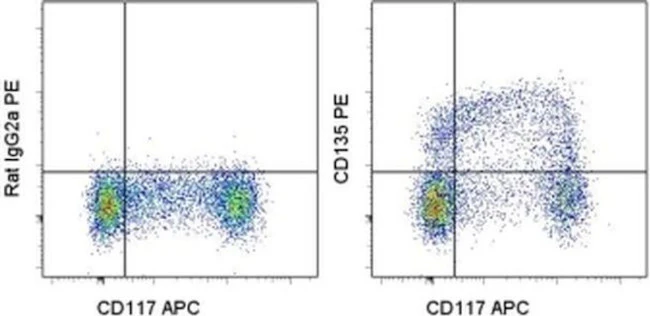
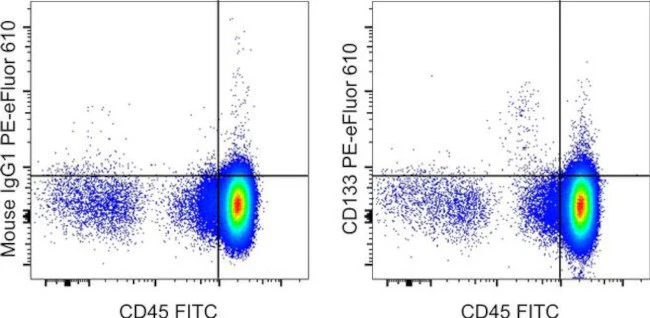
Applications Tested: This HP-MA4 antibody has been pre-titrated and tested hy flow cytometric analysis of normal human peripheral blood cells. This can be used at 5 µL (0.25 µg) per test. A test is defined as the amount (µg) of antibody that will stain a cell sample in a final volume of 100 µL. Cell number should be determined empirically but can range from 10^5 to 10^8 cells/test.
Excitation: 488-561 nm; Emission: 578 nm; Laser: Blue Laser, Green Laser, Yellow-Green Laser.
Filtration: 0.2 µm post-manufacturing filtered.
For Research Use Only. Not for use in diagnostic procedures. Not for resale without express authorization.

Description
PRODUCT DETAILS
Host: Mouse
Isotype: IgG2b, kappa
Clonality: Monoclonal
Clone: HP-MA4
Format: PE
Reactivity: Hu
Application: Flow Cytometry
Tested Dilution: 5 µL (0.25 µg)/test
Concentration: 5 μL/Test
Storage: 4°C, store in dark, DO NOT FREEZE!
Formulation: PBS with BSA and 0.09% sodium azide; pH 7.2
Purification: Affinity chromatography
Data Sheet: TDS
Specific Information
Description: The monoclonal antibody HP-MA4 recognizes several CD158 proteins, also known as KIR2D, specifically KIR2DL1 (CD158a), KIR2DS1 (CD158h), KIR2DS3, and KIR2DS5 (CD158g). It does not recognize KIR2DL2 (CD158b1), KIR2DS2 (CD158j), KIR2DL4 (CD158d) or KIR2DS4 (CD158i) and crossreactivity to KIR2DL3 (CD158b2) and KIR2DL5 (CD158f) are unknown. CD158 proteins are members of the killer cell immunoglobulin-like receptors (KIR) family of transmembrane glycoproteins that are expressed on NK cells and a subset of T cells. Each KIR has an isoform with either a short (S) or long (L) cytoplasmic domain which transduces either an activating or inhibitory signal, respectively. The crossreactivity of the HP-MA4 antibody to KIR2DS3 and KIR2DS5 was published in 2013.
Applications Reported: This HP-MA4 antibody has been reported for use in flow cytometric analysis.
Applications Tested: This HP-MA4 antibody has been pre-titrated and tested hy flow cytometric analysis of normal human peripheral blood cells. This can be used at 5 µL (0.25 µg) per test. A test is defined as the amount (µg) of antibody that will stain a cell sample in a final volume of 100 µL. Cell number should be determined empirically but can range from 10^5 to 10^8 cells/test.
Excitation: 488-561 nm; Emission: 578 nm; Laser: Blue Laser, Green Laser, Yellow-Green Laser.
Filtration: 0.2 µm post-manufacturing filtered.
For Research Use Only. Not for use in diagnostic procedures. Not for resale without express authorization.