CD19 Monoclonal Antibody (eBio1D3 (1D3)), Functional Grade, eBioscience
PRODUCT DETAILS
Host: Rat
Isotype: IgG2a, kappa
Clonality: Monoclonal
Clone: eBio1D3 (1D3)
Format: Functional Grade
Reactivity: Ms
Application: Flow Cytometry
Tested Dilution: 0.5 µg/test
Concentration: 1 mg/mL
Storage: 4°C
Formulation: PBS with no preservative; pH 7.2
Purification: Affinity chromatography
Data Sheet: TDS
Specific Information
Description: The eBio1D3 monoclonal antibody reacts with mouse CD19, a 95 kDa transmembrane glycoprotein. CD19 is expressed by B cells during all stages of development excluding the terminally differentiated plasma cells. Follicular dendritic cells also express CD19. Together CD21, CD81, MHC class II, and CD19 form a multimolecular complex that associates with the BCR. Signaling through CD19 induces tyrosine phosphorylation, calcium flux and proliferation of B cells.
Applications Reported: This eBio1D3 (1D3) antibody has been reported for use in flow cytometric analysis, and immunohistology staining of frozen tissue sections. The eBio1D3 monoclonal antibody has also been reported to induce down-regulation of CD19, affecting the proportions of B-1a and B-2 B cells in mice.
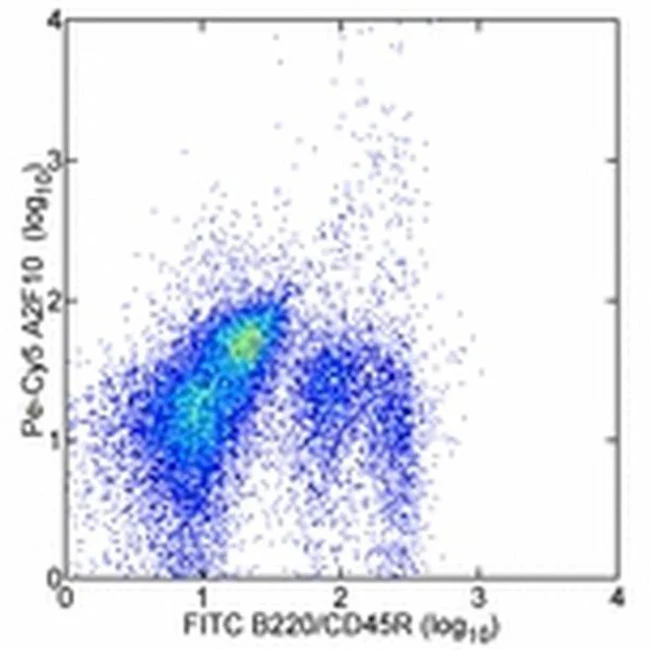
Applications Tested: This eBio1D3 (1D3) antibody has been tested by flow cytometric analysis of mouse splenocytes. This can be used at less than or equal to 0.5 µg per test. A test is defined as the amount (µg) of antibody that will stain a cell sample in a final volume of 100 µL. Cell number should be determined empirically but can range from 10^5 to 10^8 cells/test. It is recommended that the antibody be carefully titrated for optimal performance in the assay of interest.
Storage and handling: Use in a sterile environment.
Filtration: 0.2 µm post-manufacturing filtered.
Purity: Greater than 90%, as determined by SDS-PAGE.
Endotoxin Level: Less than 0.001 ng/µg antibody, as determined by LAL assay.
Aggregation: Less than 10%, as determined by HPLC.
For Research Use Only. Not for use in diagnostic procedures. Not for resale without express authorization.
Original: $122.00
-70%$122.00
$36.60
Description
PRODUCT DETAILS
Host: Rat
Isotype: IgG2a, kappa
Clonality: Monoclonal
Clone: eBio1D3 (1D3)
Format: Functional Grade
Reactivity: Ms
Application: Flow Cytometry
Tested Dilution: 0.5 µg/test
Concentration: 1 mg/mL
Storage: 4°C
Formulation: PBS with no preservative; pH 7.2
Purification: Affinity chromatography
Data Sheet: TDS
Specific Information
Description: The eBio1D3 monoclonal antibody reacts with mouse CD19, a 95 kDa transmembrane glycoprotein. CD19 is expressed by B cells during all stages of development excluding the terminally differentiated plasma cells. Follicular dendritic cells also express CD19. Together CD21, CD81, MHC class II, and CD19 form a multimolecular complex that associates with the BCR. Signaling through CD19 induces tyrosine phosphorylation, calcium flux and proliferation of B cells.
Applications Reported: This eBio1D3 (1D3) antibody has been reported for use in flow cytometric analysis, and immunohistology staining of frozen tissue sections. The eBio1D3 monoclonal antibody has also been reported to induce down-regulation of CD19, affecting the proportions of B-1a and B-2 B cells in mice.
Applications Tested: This eBio1D3 (1D3) antibody has been tested by flow cytometric analysis of mouse splenocytes. This can be used at less than or equal to 0.5 µg per test. A test is defined as the amount (µg) of antibody that will stain a cell sample in a final volume of 100 µL. Cell number should be determined empirically but can range from 10^5 to 10^8 cells/test. It is recommended that the antibody be carefully titrated for optimal performance in the assay of interest.
Storage and handling: Use in a sterile environment.
Filtration: 0.2 µm post-manufacturing filtered.
Purity: Greater than 90%, as determined by SDS-PAGE.
Endotoxin Level: Less than 0.001 ng/µg antibody, as determined by LAL assay.
Aggregation: Less than 10%, as determined by HPLC.
For Research Use Only. Not for use in diagnostic procedures. Not for resale without express authorization.