CD9 Monoclonal Antibody (eBioKMC8 (KMC8)), eBioscience
PRODUCT DETAILS
Host: Rat
Isotype: IgG2a, kappa
Clonality: Monoclonal
Clone: eBioKMC8 (KMC8)
Reactivity: Ms
Application: Flow Cytometry
Tested Dilution: 1 µg/test
Concentration: 0.5 mg/mL
Storage: 4°C
Formulation: PBS with 0.09% sodium azide; pH 7.2
Purification: Affinity chromatography
Data Sheet: TDS
Specific Information
Description: The eBioKMC8 monoclonal antibody reacts with mouse CD9, a 24 kDa member of the transmembrane 4 superfamily. This family is characterized by the presence of four hydrophobic domains spanning the cell membrane and short N- and C-terminal cytoplasmic domains. CD9 is expressed by several cell types including monocytes, macrophages, platelets, early B cells, activated B and T cells, dendritic cells, eosinophils, basophils, endothelial cells, myoblasts and neuroblasts. On T cells, CD9 functions as a co-stimulatory molecule on naive T cells. Furthermore, CD9 is expressed in oocytes, and CD9-deficiency results in sterility caused by defective gamete fusion. In mouse macrophages, CD9 functionally associates with FcgammaRs to modify signals for phagocytosis and inflammatory responses. In mouse B cells, it was discovered that CD9 is a marker for marginal zone B cells, B1 cells, and plasma cells. In dendritic cells, recently it was demonstrated that CD9 facilitates the association of heterologous MHC II molecules. The level of CD9 expression is subject to donor variability.
Applications Reported: This eBioKMC8 (KMC8) antibody has been reported for use in flow cytometric analysis, and immunoblotting (WB) (non-reducing).
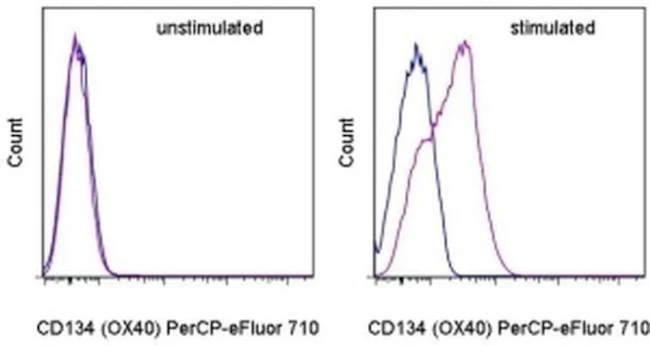
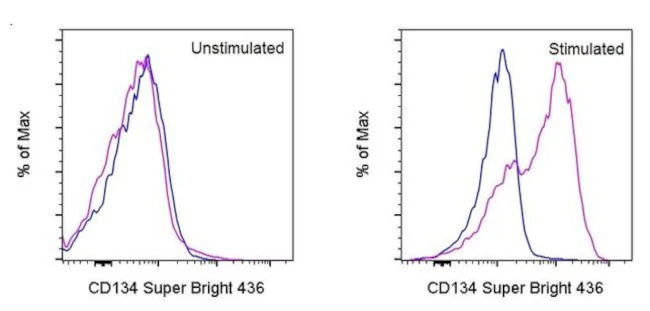
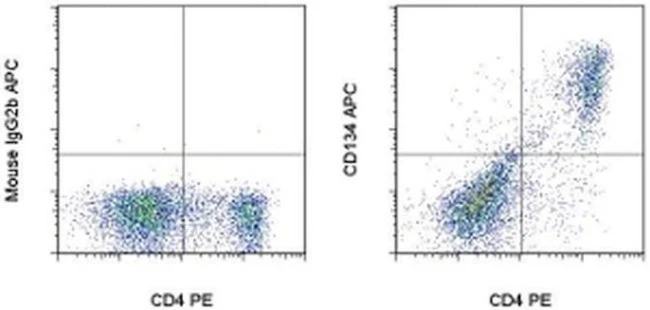
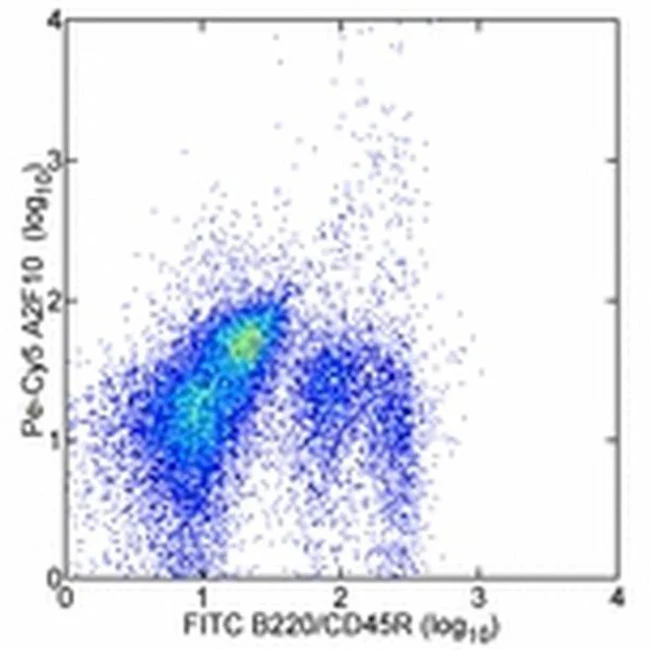
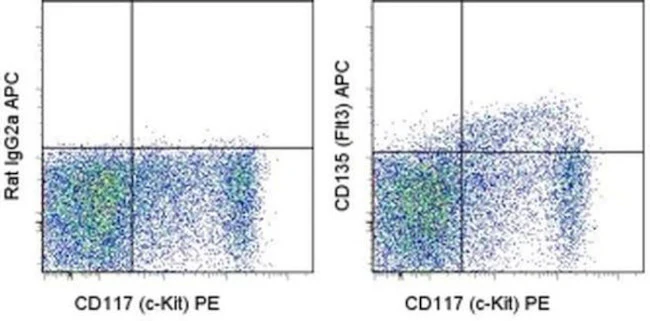
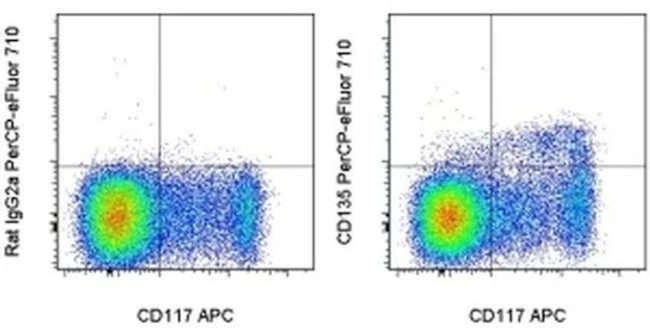
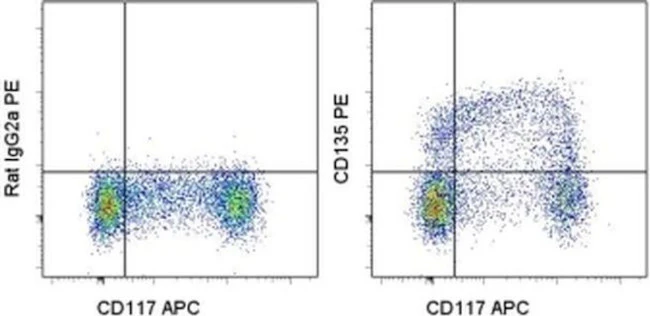
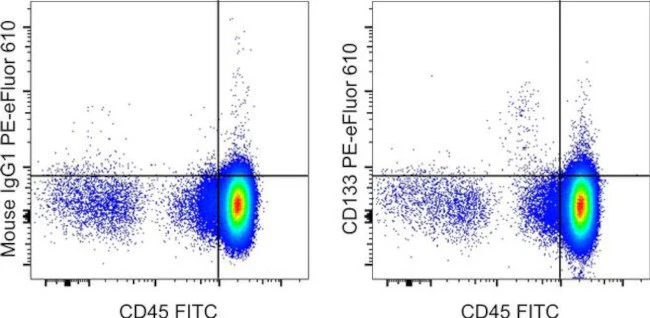
Applications Tested: This eBioKMC8 (KMC8) antibody has been tested by flow cytometric analysis of mouse splenocytes and bone marrow cells. This can be used at less than or equal to 1 µg per test. A test is defined as the amount (µg) of antibody that will stain a cell sample in a final volume of 100 µL. Cell number should be determined empirically but can range from 10^5 to 10^8 cells/test. It is recommended that the antibody be carefully titrated for optimal performance in the assay of interest.
Purity: Greater than 90%, as determined by SDS-PAGE.
Aggregation: Less than 10%, as determined by HPLC.
Filtration: 0.2 µm post-manufacturing filtered.
For Research Use Only. Not for use in diagnostic procedures. Not for resale without express authorization.
Original: $157.00
-70%$157.00
$47.10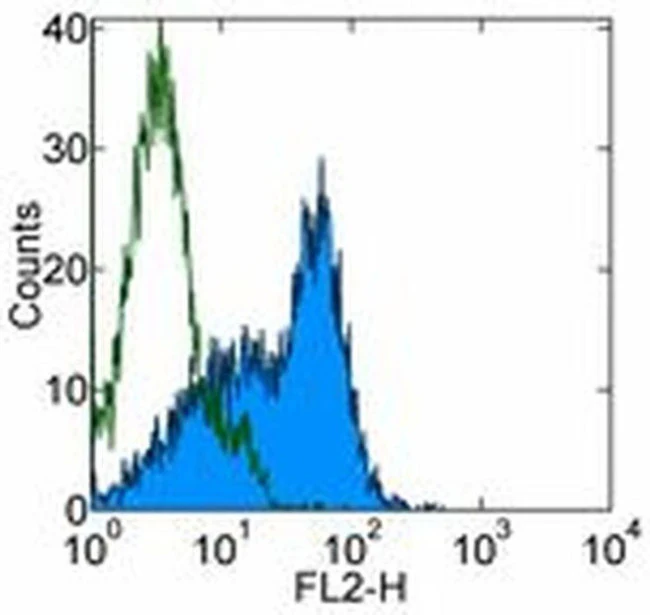
Description
PRODUCT DETAILS
Host: Rat
Isotype: IgG2a, kappa
Clonality: Monoclonal
Clone: eBioKMC8 (KMC8)
Reactivity: Ms
Application: Flow Cytometry
Tested Dilution: 1 µg/test
Concentration: 0.5 mg/mL
Storage: 4°C
Formulation: PBS with 0.09% sodium azide; pH 7.2
Purification: Affinity chromatography
Data Sheet: TDS
Specific Information
Description: The eBioKMC8 monoclonal antibody reacts with mouse CD9, a 24 kDa member of the transmembrane 4 superfamily. This family is characterized by the presence of four hydrophobic domains spanning the cell membrane and short N- and C-terminal cytoplasmic domains. CD9 is expressed by several cell types including monocytes, macrophages, platelets, early B cells, activated B and T cells, dendritic cells, eosinophils, basophils, endothelial cells, myoblasts and neuroblasts. On T cells, CD9 functions as a co-stimulatory molecule on naive T cells. Furthermore, CD9 is expressed in oocytes, and CD9-deficiency results in sterility caused by defective gamete fusion. In mouse macrophages, CD9 functionally associates with FcgammaRs to modify signals for phagocytosis and inflammatory responses. In mouse B cells, it was discovered that CD9 is a marker for marginal zone B cells, B1 cells, and plasma cells. In dendritic cells, recently it was demonstrated that CD9 facilitates the association of heterologous MHC II molecules. The level of CD9 expression is subject to donor variability.
Applications Reported: This eBioKMC8 (KMC8) antibody has been reported for use in flow cytometric analysis, and immunoblotting (WB) (non-reducing).
Applications Tested: This eBioKMC8 (KMC8) antibody has been tested by flow cytometric analysis of mouse splenocytes and bone marrow cells. This can be used at less than or equal to 1 µg per test. A test is defined as the amount (µg) of antibody that will stain a cell sample in a final volume of 100 µL. Cell number should be determined empirically but can range from 10^5 to 10^8 cells/test. It is recommended that the antibody be carefully titrated for optimal performance in the assay of interest.
Purity: Greater than 90%, as determined by SDS-PAGE.
Aggregation: Less than 10%, as determined by HPLC.
Filtration: 0.2 µm post-manufacturing filtered.
For Research Use Only. Not for use in diagnostic procedures. Not for resale without express authorization.